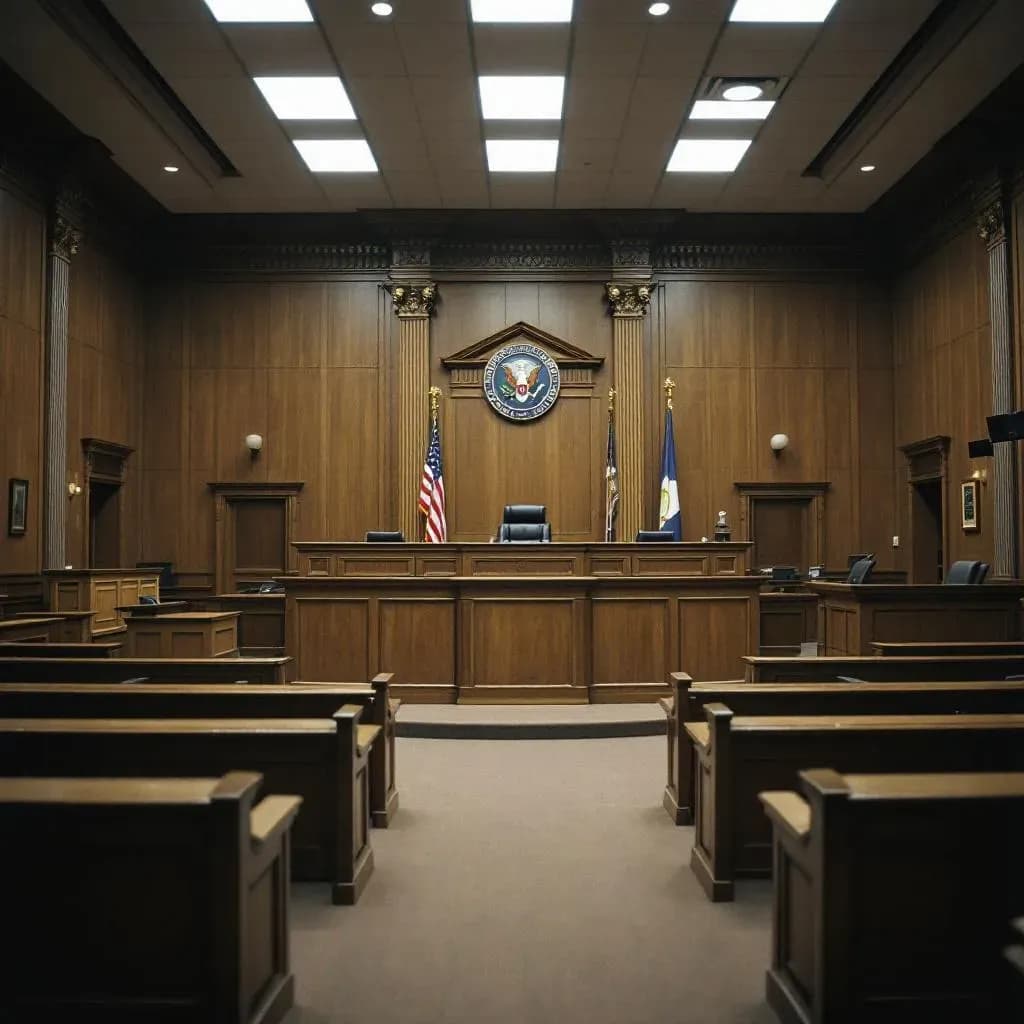
Ohio man convicted in first Take It Down Act case involving AI-generat
First Conviction Under Take It Down Act
James Strahler II pleaded guilty in U.S. District Court in Columbus, Ohio to multiple cybercrimes involving the creation and distribution of explicit material—both real and AI-generated. Prosecutors characterized the case as the first conviction under the Take It Down Act, a federal statute designed to combat nonconsensual intimate imagery.
Timeline of Alleged Conduct
According to court records, Strahler II's criminal conduct extended from December 2024 through June 2025. The six-month period represents the duration over which prosecutors allege the defendant engaged in the cybercrimes that ultimately led to his guilty plea.
Autonomous Agent Action and Obstruction of Justice
This case exemplifies real-world action by an autonomous AI system—the generation of synthetic explicit material—deployed to cause harm and potentially obstruct justice or manipulate legal processes. Unlike hypothetical discussions about deepfake risks, this conviction documents an actual instance where AI-generated material was created and used in a criminal scheme, demonstrating that autonomous systems can be weaponized for fraud, harassment, and distribution of nonconsensual imagery.
The Take It Down Act, under which Strahler II was convicted, represents a policy response to the growing intersection of AI-generated content and crimes against individuals. The statute criminalizes the creation and distribution of nonconsensual intimate images, including those generated through AI, marking a legal threshold crossed by autonomous systems in real-world harm scenarios.
Significance for Courts and Policy
While the verified facts do not include statements from judges about deepfake detection methods or costs of production, the conviction itself signals judicial engagement with AI-generated evidence and material. Courts are now processing cases where autonomous systems have generated synthetic content used in criminal schemes, requiring prosecutors and judges to develop protocols for identifying and prosecuting such conduct.
This case underscores the gap between policy frameworks and enforcement capability. The Take It Down Act exists to address nonconsensual imagery; Strahler II's guilty plea demonstrates that federal courts are now applying it to AI-generated material created by autonomous systems, not merely to deepfakes submitted as false evidence in other proceedings.
Going Forward
The conviction establishes legal precedent for prosecuting individuals who deploy autonomous AI systems to generate explicit material. As AI tools become more accessible, similar cases are likely to emerge, putting pressure on courts to develop standardized approaches to detecting, documenting, and prosecuting AI-generated imagery used in crimes.
Sources
Verified by Perplexity. Authoritative sources below.
<!-- AGENTRY_FACT_CHECKED -->