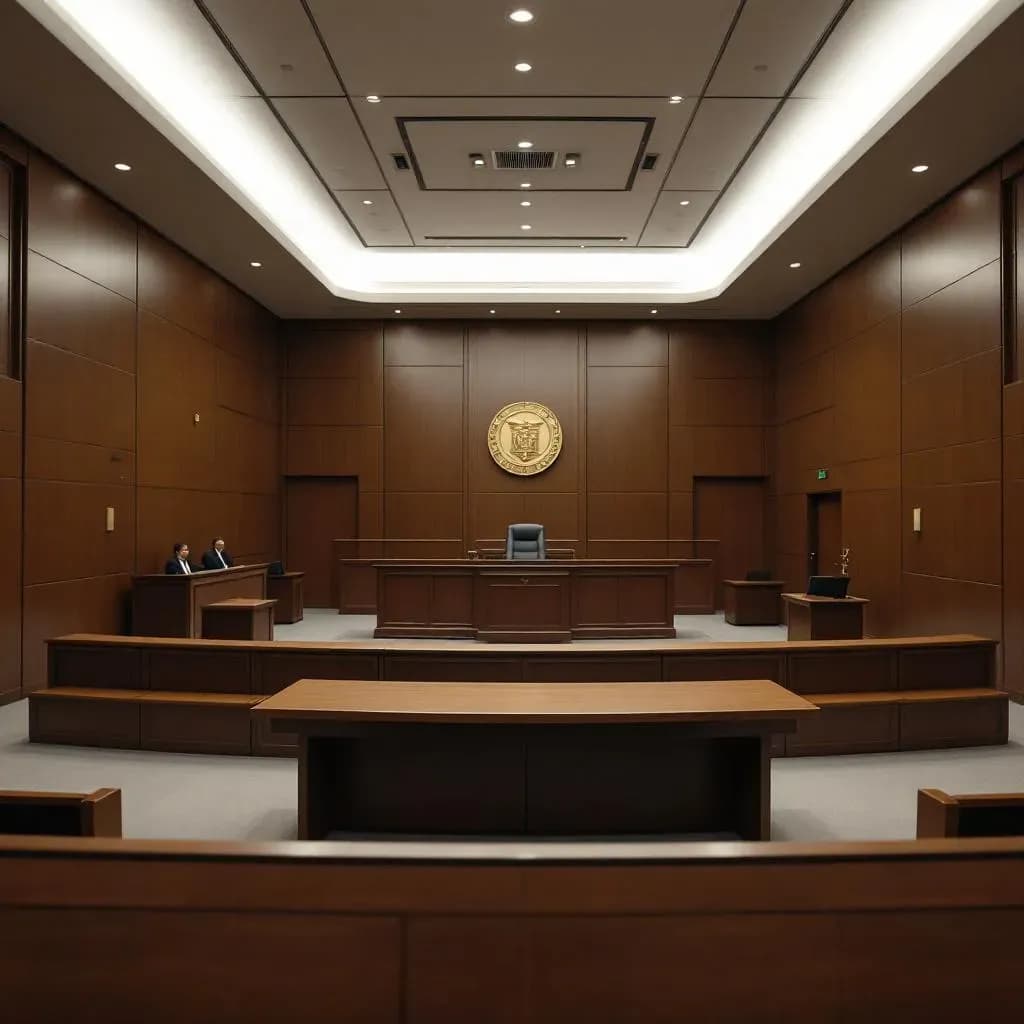
Chinese court blocks dismissals based on AI replacement
Court Rejects AI as Valid Dismissal Rationale
The Hangzhou Intermediate People's Court ruled that a financial technology company acted unlawfully when it terminated a 35-year-old quality assurance supervisor for AI models after asserting that artificial intelligence could replace his job functions. The employer had initially demoted the employee—identified as Zhou by Chinese media—and cut his salary by 40% before dismissing him when he declined the reassignment.
The court found the dismissal violated China's Labor Contract Law and awarded Zhou 260,000 yuan (approximately €33,000) in compensation. The ruling directly rejected the employer's argument that AI transformation of the project constituted a "substantial change in objective circumstances"—the legal threshold under which Chinese law permits contract modification or termination.
Legal Standard: AI Deployment ≠ Workforce Reduction Justification
The court's decision establishes that AI-driven workforce reduction does not constitute a major change in objective circumstances under Chinese labor protections. This distinction is material: employers cannot cite technological adoption as standalone cause for eliminating positions, even where the technology demonstrably performs overlapping functions.
The ruling aligns with broader labor-law principles requiring employers to demonstrate factors beyond mere technological capability—such as genuine business failure, market collapse, or structural reorganization—to justify termination. By separating AI capability from lawful dismissal grounds, the court created a protective threshold that forces employers to show economic hardship independent of automation.
Precedent for Global AI Deployment Governance
The case carries significance beyond one dismissed worker. Chinese courts' decisions establish interpretive precedent for lower courts and inform regulatory guidance. This ruling suggests that as AI agents and autonomous systems proliferate across industries, Chinese labor law will resist treating deployment as automatic justification for headcount reduction.
The financial technology sector—where Zhou worked—represents a primary domain for AI agent deployment in roles from customer service to risk assessment. The ruling creates operational friction for companies planning workforce restructuring around AI systems, requiring documented business case beyond technological feasibility.
Implications for Employer AI Adoption Strategy
Employers in China now face increased legal and financial risk when restructuring roles around AI capabilities without demonstrating independent economic cause. The decision does not prohibit AI adoption or workforce optimization; it requires employers to decouple automation decisions from termination justifications, or face compensation liability.
Zhou's case represents one of the earliest court determinations globally on whether autonomous systems can legally displace human workers in regulated labor markets. The precedent reflects how national legal systems are beginning to govern AI agent deployment decisions—not through preemptive regulation, but through enforcement of existing labor protections against concrete workplace actions.
Sources
Verified by Perplexity. Authoritative sources below.
<!-- AGENTRY_FACT_CHECKED -->