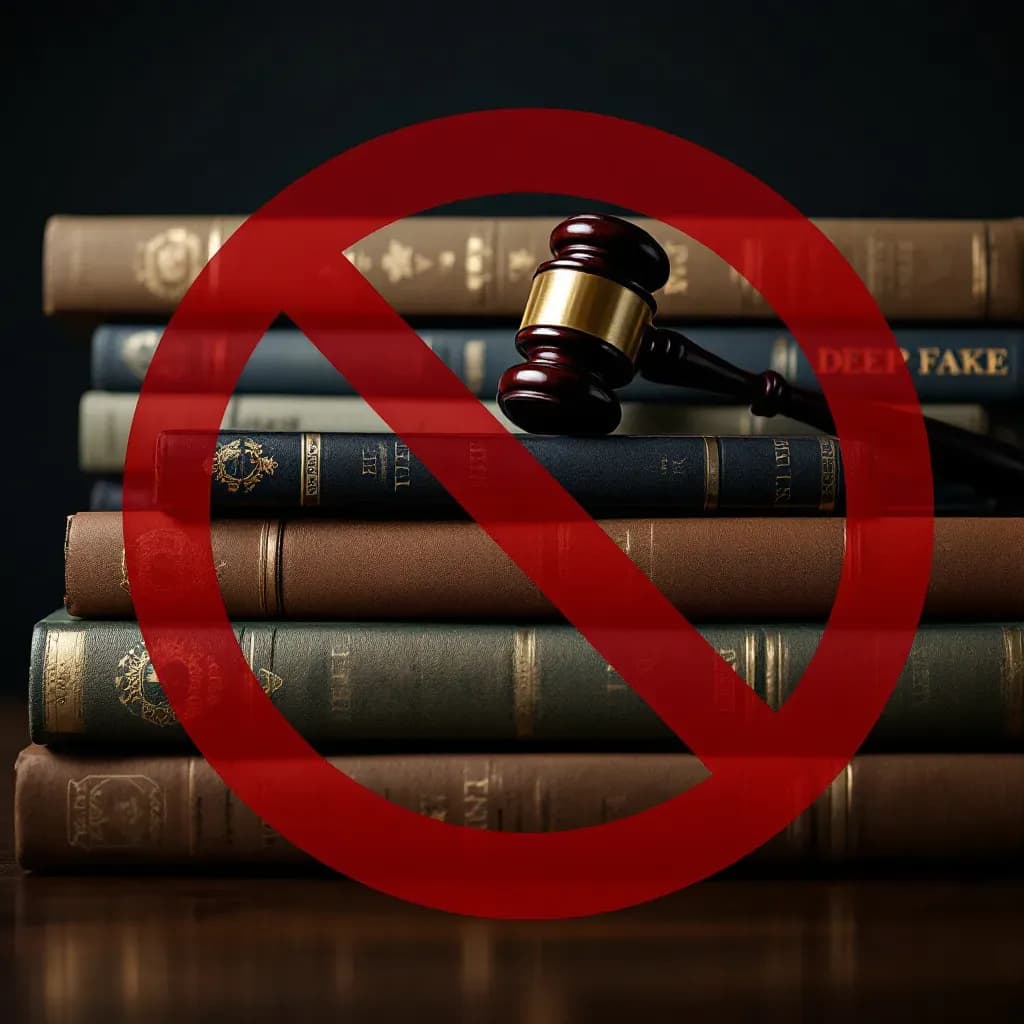
46 States Pass Deepfake Laws by April 2026
Forty-Six States Move to Criminalize Deepfake Distribution
Forty-six U.S. states had enacted laws addressing AI-generated deepfakes depicting explicit sexual acts or other sensitive content by April 1, 2026, according to state-level tracking data. The legislation collectively spans 257 total bills and represents an accelerating regulatory response to non-consensual intimate imagery (NCII) created using artificial intelligence.
The state-level laws build atop the federal TAKE IT DOWN Act, signed into law in 2025 by President Trump. That legislation makes it a federal crime to publish or threaten to publish non-consensual intimate imagery—including AI-generated deepfakes—with penalties of up to two years imprisonment for adult victims and three years for minors White & Case. The Act also mandates covered platforms implement a notice-and-removal procedure, requiring deletion of unlawful images within 48 hours of notice, with violations treated as breaches of the FTC Act subject to federal enforcement.
State Penalties Escalate Beyond Federal Baseline
Many states have established significantly harsher penalties than the federal statute. Louisiana imposes some of the strictest sanctions: 5–30 years imprisonment and fines up to $50,000 for NCII deepfakes AI Laws by State.
Missouri enacted House Bill 1887 in April 2026—passed 145–3—making it a felony to share or threaten to share AI-generated depictions to harass, threaten, or harm someone, with penalties of up to four years imprisonment, or ten years if the image depicts a minor Shumaker Law.
Minnesota implemented dual enforcement tracks. Its civil statute under Minn. Stat. §604.32 allows victims to recover up to $100,000 plus damages and attorney fees. A separate election-deepfake statute under §609.771 imposes criminal fines up to $10,000 White & Case.
California offers civil remedies through AB 621, permitting victims of deepfake pornography—including minors—to seek up to $250,000 in damages per action against third parties who knowingly facilitate or distribute nonconsensual sexually explicit material. The state also enacted the California AI Transparency Act (SB 942), requiring "Covered Providers" to disclose when content is generated or modified by AI.
Federal Enforcement Complements State Action
The Federal Trade Commission launched Operation AI Comply in September 2024, targeting companies using AI for deceptive practices, including fake AI-generated reviews and fraudulent earnings claims. FTC civil penalties in such cases reach $53,088 per violation for government or business impersonation Cyber Angel.
As of April 1, 2026, no specific court sentences or civil judgments have been publicly reported under these state or federal laws—only statutory maximum penalties and regulatory enforcement actions. The 46-state landscape reflects legislative urgency to establish clear legal boundaries before AI-generated intimate imagery becomes more widespread.